Wednesday, January 9, 2013

Understanding Anaphylaxis


Anaphylaxis (pronounced ANA-FALL-AXIS) is a life-threatening, whole body, allergic reaction to a chemical substance (MedlinePlus).  The reaction can be swift and catastrophic if not treated quickly.  Anaphylaxis occurs when exposed to an allergen and the body becomes sensitized to it.  Subsequent exposure results in a systemic immune response, the releasing of histamine, and resulting in a typical physical response.  Signs and symptoms of a typical reaction include hives, difficulty breathing, itching, swelling of lips, face, and/or tongue among others. 

COMMON ALLERGIES
Anaphylaxis can occur in response to any allergen, but is most rare in response to pollen and other inhaled allergens.  Allergies that are more likely to cause anaphylaxis are drug allergies, food allergies, and insect bites/stings. 

According to the CDC approximately 4% - 6% of children under 18 years old suffer from food allergies.  The prevalence of allergies is also on the rise, but the reasons for the increase are unknown.  Eight types of food account for 90% of all food allergy reactions:  cow’s milk, eggs, peanuts, tree nuts (walnuts, pecans, hazelnuts, etc.), fish, shellfish, soybeans, and wheat.  The CDC has paid particular attention to limiting accidental exposure to food allergens for children in school, as this has been of particular concern.

Drug allergies result in the same allergic response from the body as other allergens.  Most often, this reaction results in a mild rash and hives, but a severe anaphylaxis reaction is possible.  According to the NIH penicillin (and other antibiotics) are the most common cause of drug allergies.  Other drug classes that can cause an allergic response are anticonvulsants, insulin (especially animal based), iodinated x-ray contrast dyes, and sulfa drugs.  Severe allergic reactions to medication, overdoses, or other negative responses to medication are referred to “adverse drug events.”  To learn more about adverse drug events in children check out the information provided by the CDC.

When stung by an insect there is typically an immediate reaction of minor redness and itching.  For most people, the reaction ends and over a period of days the bite site begins to heal.  For someone who has an anaphylactic response to an insect bite the pain, redness and swelling will likely be much more severe and the person may report difficulty breathing.  The most common insects that cause an anaphylactic response are bees, wasps, hornets, and spiders.

IMMEDIATE TREATMENT OF ANAPHYLAXIS
If you are in a situation, where you suspect anaphylaxis the most important thing you can do is call 911 and initiate the emergency medical system (EMS).  You should also assess whether or not the individual is having difficulty breathing, if so monitor ABCs (airway, breathing, and circulation) until EMS arrives and be prepared to initiate rescue breathing or CPR as necessary.  It is also important to understand what allergy may be causing the reaction so that you can provide appropriate first aid.  Here is a list of key steps for the immediate care for someone suffering for anaphylaxis:
  • Activate EMS
  • Assess ABCs and initiate rescue breathing and CPR as necessary
  • If having difficulty breathing monitor for worsening symptoms and do not give food or drink
  • If available, instruct victim (or if necessary assist victim) in administering epi-pen
    • victims with known severe food or insect bite allergies may have an epi-pen available
  • If reaction is because of an insect sting, remove the stinger using a stiff card (such as credit card or driver’s license, do NOT use tweezers)
  • Remove any restricting clothing or jewelry around area of potential swelling to limit additional complications
  • Monitor victim until EMS arrives


For more specific information on how to treat a typical allergic reaction check out the information made available by the NIH for food allergies, drug allergies and bee/insect bites.

PREVENTION OF ANAPHYLAXIS
There are many situations where people are unaware that they have an allergy until they have their first adverse reaction making prevention impossible in these cases.  For someone with a diagnosed allergy, especially a severe one, it is very important that all effort be made to avoid contact with or ingestion of the allergen.  In many cases, individuals with severe allergies are encouraged to wear a medical alert bracelet and have an epi-pen available at all times. 

How food allergies develop are not fully understood although some research shows that breast feeding infants and delaying the introduction of common allergy inducing foods to infants until their gastrointestional tracts are mature enough to handle them (this varies by food) can help decrease the likelihood of allergies.  Once an allergy becomes known, the best prevention is to avoid the food you are allergic too.

Similar to food allergies, drug allergies should be prevented by avoiding the offending medication and often, similar medications (those in the same class). 

Finally, to minimize the possibility of being stung by a bee or other insect there are several things you can do.  Most importantly, when eating outside do not hang around garbage cans or near a large number of sweet drinks or foods.  You should also avoid wearing floral perfumes and dark or floral patterned clothing.

INTERNET RESOURCES


Submitted by Heather L. Clemons, M S, MBA, ATC

Wednesday, January 2, 2013

Mental Health Resources for Children and Adolscents


In light of the tragic events in Newtown, Connecticut at Sandy Hook Elementary School the topics of gun control and appropriate mental health care for our nation’s young people is again at the forefront.  As the debate continues following the events in Newtown there will be many discussions about gun control legislation as well as the current mental health system in the United States.  This blog entry is not a commentary on how to prevent other tragedies through various political and social actions.  My intention is to shed some light on who to connect with and how to access resources around mental health issues for parents who have questions.  Addressing one's mental health should be as important as addressing physical ailments, but because of the stigma connected with mental health conditions this aspect of overall wellness is often overlooked. 

MENTAL HEALTH CONDITIONS:
Children and adolescents can suffer from a variety of mental health issues, just as adults.  The list of mental health concerns includes depression, anxiety disorders, personality disorders, autism, eating disorders, ADHD, and post traumatic stress disorder (PTSD), among others.  Discussing each of these disorders is beyond the scope of this post, but I will provide a few recent statistics made available by the National Institute of Mental Health (NIMH).  Further description of each condition can be found by searching the condition name on the American Psychiatric Association or American Psychological Association websites.

  • The lifetime prevalence for depression in 13 – 18 year old children is 11.2%, with 3.3% of this same group having a severe depressive disorder.
  • Attention Deficit-Hyperactivity Disorder (ADHD) has a lifetime prevalence of 9% in 13 – 18 year old children. 
  • Anxiety disorder is the general description that includes the specific diagnosis of general anxiety disorder (GAD), obsessive-compulsive disorder, panic disorder, PTSD, and phobias.  GAD has a lifetime prevalence of 1% in 13 – 18 year old children according to the NIMH. 


MENTAL HEALTH PROVIDERS:
When seeking mental health care one of the first questions often asked is, who should I see?.  Speaking with your family physician or pediatrician is often a great place to start when looking for recommendations in your local community.  It is also helpful to understand the major types of professionals available.  You will find a brief summary of psychiatrists, psychologists and clinical social workers.  You may also have the option of counselors and marriage and family therapists depending on your specific need.
  
Psychiatrists
Psychiatrists are medical doctors (MD, DO) who graduated from a medical school and further specialized in the area of psychiatry.  This means that following medical school they complete a four-year residency in the area of psychiatry.  Some choose to specialize even further and obtain additional training.  Some specialization areas include child and adolescent, geriatric, and addition psychiatry among others.

They specialize in the diagnosis, treatment, and prevention of mental illnesses.  Psychiatrists treat both the physical and mental aspects of mental illness.  Their treatment options can range from psychotherapy (talk therapy), medications, and other treatment options.  For further information visit the American Psychiatric Association website.

Psychologists
Psychologists with a doctoral degree (PhD, PsyD, EdD), have at least seven years of education and training beyond their undergraduate education.  Psychologists have dozens of career options in research, teaching or clinical practice.  Specialties can include educational, industrial or clinical psychology among others.

The psychologists we most often think of who provide talk therapy treatment are clinical psychologists.  These psychologists have a doctoral degree and must me licensed in the state in which they work.  They typically provide treatment for people who need help coping with life issues and mental issues using a variety of theories and techniques based on the patient’s values.  Many of them are also qualified to administer and interpret a variety of tests and assessments.  Unlike psychiatrists, psychologists cannot prescribe medications.  For further information visit the American Psychological Association (APA) website.  Other associations you may wish to investigate include the Society of Clinical Psychology, Division 12 and Society of Counseling Psychology, Division 17.

Social Workers
Social workers can earn degrees at bachelors (BSW), masters (MSW) and doctorate (DSW, PhD) level, each with their own particular knowledge and competencies.  A licensed clinical social worker (LCSW) typically has two years of graduate school and internship (supervised field instruction) in the area of psychotherapy.  Other specialty areas where you will find social workers include adolescent health, aging, violence, and children, youth and family among others.

Clinical social workers provide psychotherapy (talk therapy) to patients who need help coping with life issues and mental health issues.  This is much in the same way as a psychologist.  For more information about clinical social workers and the other specialties in social work visit the National Association  of Social Workers (NASW).

To find out more information about counselors visit the American Counseling Association website.

MENTAL HEALTH RESOURCES:

Specific to Sandy Hook

General Resources

National Alliance on Mental Illness (NAMI) Internet resource list

Submitted by Heather L. Clemons, MS, MBA, ATC

Saturday, December 15, 2012

Cheerleading Injuries Continue to Increase


Despite what some people may think, cheerleading has become more than just catchy cheers and pompoms.  Cheerleading has become increasingly popular over the last 20 years with over 400,000 participants in high schools according to the National Federation of State High Schools (keep in mind this does not include colleges, all star teams or other non-school based programs at any level).  Today cheerleading has become more about stunts and the flyers who perform them and less about cheers and basic dance moves.  The stunts are typically crowd pleasers, but as flyers are tossed higher and higher in the air the risk of injury increases.  Injuries can range from minor sprains and strains to the catastrophic ones (including concussions and neck fractures).  On average, five cheerleaders annually will suffer a catastrophic injury.  Catastrophic cheerleading injuries account for 65% of all catastrophic injuries at the high school level and 70.8% at the college level for girls.  To address the safety concerns associated with cheerleading and its complex stunts the American Academy of Pediatrics (AAP) has issued some safety recommendations.

The position statement issued in November of this year, Cheerleading Injuries:  Epidemiology and Recommendations for Prevention, discusses the current trends in cheerleading injuries and makes several recommendations to improve the safety of all participants.  An overwhelming majority of participants are girls/women (96%) and injury rates have been steadily rising over the last 20 years.  The average injury rate 1 in 1000 athletic exposures, but tends to increase with age and competitive level.  Case in point, the injury rate for college cheerleaders is 2.4 in 1000 exposures.  Overall, sprains and strains account for 53% of all injuries with lower extremity injuries more common in older participants and upper extremity injuries more common in younger participants.  Head and neck injuries (including concussions) account for 4% of all injuries.  Of those injuries seen in the emergency department, concussions (and other closed head injuries) account for 4-6% of injuries while head and neck injuries account for 15% of all cheerleading injuries.

Considering injury rates and risk factors (BMI, type of floor surface, coach with low training or experience), the AAP has made recommendations to improve cheerleader safety.  Some key highlights are below, for the full list click HERE.

  • requiring that cheerleading be designated as a sport so it must follow safety guidelines and have access to medical care (such as pre-participation physical, athletic trainers, physicians)
  • requiring coach training and certification
  • requiring strength and conditioning for participants
  • avoiding stunts and tumbling on hard surfaces
  • enacting specific rules for performing technical skills
  • appropriate spotter training


As a parent of a cheerleader it is important to know whether the program your child is participating in follows these recommendations.  While all of these recommendations should be followed, initial inquiries should focus on whether cheerleading is designated as a sport and about the training of team coaches.  Currently most colleges and over 20 of the states do not recognize cheerleading as a formal sport, making it difficult to oversee program safety and track injury rates.  Often times, if cheerleading is not considered a sport, participants are not screened annually (pre-participation physical exam) or provided regular medical care and coverage like other teams.  Additionally, training and certification for coaches may not be required.  Education and awareness will be your most effective tool for prevention.  Make sure you know what the safety situation is for your cheerleader and help reduce the potential for injury.

For a video discussing the recommendations, click HERE.  

Submitted by Heather L. Clemons, MS, MBA, ATC

Wednesday, November 28, 2012

Diabetes Mellitus Cases on the Rise


November is Diabetes Awareness month and the Centers for Disease Control and Prevention has published its most recent findings on the prevalence of Diabetes Mellitus in the United States.  Currently it is estimate that 25.8 million people (children and adults) suffer from diabetes here in the United States.  The number of diagnosed cases of diabetes has increased in all fifty states from 1995 – 2010.  More specifically, there was a 50% or more increase in diabetes cases in 42 of 50 states during that 15-year span with 18 states experiencing a 100% or more increase.  Type 2 Diabetes has accounted for 90% – 95% of the increase in diabetes cases in the United States.  A further breakdown of the results can be found HERE.  If you would like specific data for your state and/or county check out the CDC Diabetes Interactive Atlases. 

There are three types of diabetes mellitus:  type 1, type 2 and gestational.  For the purpose of this post I will focus on comparing type 1 and type 2 diabetes mellitus.  The following table highlights key information as available from the National Institute of Diabetes and Digestive and Kidney Diseases (NIDDK) and the National Diabetes Information Clearinghouse.


Type 1
Type 2
Definition
The body makes little to no insulin because the body destroys its own beta insulin cells in the pancreas
The body cannot utilize the insulin it produces because the insulin has become dysfunctional and does not remove sugar (glucose) from the blood
Diagnosis/Factors
Autoimmune condition; genetic and environmental factors could also play a role
Genetic, obesity, physical inactivity, metabolic syndrome
Onset
Rapid (within weeks)
Slow (years)
Warning signs
Increased thirst and urination, weight loss, extreme tiredness, constant hunger
Feeling tired or ill, frequent urination (especially at night), unusual thirst, frequent infections, slow wound healing, weight loss
Affected groups
Can affect any age, but most cases diagnosed between 5 – 25 years
Traditionally common in overweight, inactive adults, but as childhood obesity increases so have the cases of type 2 diabetes in young people
Dependency
Insulin dependent
Not insulin dependent
Cure
None
Physical exercise, healthy diet and weight loss
Treatment
Insulin injections, diet modifications, regular physical activity; key is controlling glucose levels
Diet, exercise, weight loss, medication (some cased do require insulin injections)

TYPE 2 DIABETES AND YOUTH OBESITY
Currently 1 in 400 children and adolescent have been diagnosed with diabetes (type 1 and type 2).  Historically, it was more common for youth and young adults to be diagnosed with type 1 diabetes and unlikely that they would be diagnosed with type 2, leading to type 1 diabetes initially being referred to as juvenile diabetes.  As the number of diabetes cases grows, cases of type 2 diabetes in young people are increasing.  Type 1 diabetes is still more prevalent, but the rate of type 2 diabetes is increasing.  It appears that as rates of pediatric obesity increases, cases of type 2 diabetes increase.  According to the 2011 Diabetes Fact Sheet:
  • During 2002 – 2005 15,000 youth were diagnosed with type 1 annually and 3,600 youth were diagnosed with type 2 diabetes annually.
  • Among youth aged <10 years, the rate of new cases was 19.7 per 100,000 each year for type 1 and 0.4 per 100,000 for type 2 diabetes.  Among youth aged 10 years or older, the rate of new cases was 18.6 per 100,000 each year for type 1 and 8.5 per 100,000 for type 2 diabetes.
  • Type 2 diabetes was extremely rare among youth aged < 10 years; while still infrequent, rates were greater among youth aged 10 – 19 years than in younger children.
  • For youth aged 10 – 19 race influences the frequency of type 1 and type 2 diabetes; for non-Hispanic white youth the rate of new cases was higher for type 1 than for type 2 diabetes; for non-Hispanic black and Hispanic youth had similar rates for both type 1 and type 2 diabetes; for Asian/Pacific Islander and American Indian youth the rates were higher for type 2 than type 1 diabetes.


DIABETES MELLITUS AND EXERCISE
It is important to understand the role of exercise in the treatment of both type 1 and type 2 diabetes.  Exercise can be a key factor in maintaining a healthy lifestyle for anyone who has diabetes, but understanding how exercise affects glucose and insulin levels is important to maximizing the positive role of exercise in overall health and proper management of diabetes.

For athletes and others who are living with type 1 diabetes it is important to work with their health care provider and/or diabetes educator to develop a treatment plan specific to exercise.  Understanding how exercise specifically affects insulin and glucose levels will help participants understand what sort of nutrition is required before, during and after exercise.  It also helps participants understand what adjustments to insulin dosages are required before, during and after exercise.  Each person responds differently to exercise so the nutrition/insulin-exercise plan must be individualized.  Recent research shows that resistance and aerobic exercise improves glucose control in those with type 1 diabetes.  This means exercise can be an important key in managing type 1 diabetes consistently.  Resources that can help give some basic information on exercising with type 1 diabetes include the following:


For those living with type 2 diabetes exercise is very important because it is a key component of the overall treatment plan.  Exercise combined with a well managed diet is the best combination for those who need to control their weight in an effort to manage (and potentially eliminate) type 2 diabetes.  There has been increasing attention paid to management of this condition as its prevalence continues to grow.  For recommendations on safely exercising with type 2 diabetes review the following resources:


As the obesity epidemic continues to grow, so will the number of diagnosed diabetes cases (particularly type 2).  Exercise plays an important role in decreasing the likelihood (or delaying onset) of type 2 diabetes and improving the glucose response of those living with type 1 diabetes.  It is important to take an educated approach to exercise and management of diabetes.  Living with diabetes doesn't keep you from participating in your favorite sports; your favorite sport could help you improve your overall health.

Submitted by Heather L. Clemons, MS, MBA, ATC

Wednesday, November 21, 2012

Environmental Cold Injuries: Specific Injuries


Last week’s entry discussed general keys to preventing environmental cold injuries by having an emergency action plan in place, having appropriately trained personnel available, learning to layer correctly to minimize heat loss and knowing who may be most susceptible.  Specific injuries or conditions may require specific prevention steps, but proper recognition and initial first aid are also important.  I will focus primarily on hypothermia and frostbite since they happen most often, but there are other conditions to be aware of.  Recognizing the signs and symptoms an athlete shows when presenting with an injury such as frostbite or hypothermia is critical.  Taking the appropriate steps to minimize the severity of the injury and getting appropriate treatment are also important.

HYPOTHERMIA:
Hypothermia, defined as a core temperature of 95o F or lower, affects a variety of body systems, getting more severe as the core temperature continues to drop.  Sometimes hypothermia is referred to as accidental hypothermia in the literature to differentiate it from the therapeutically induced hypothermia utilized by medical professionals.  The severity of injury is described as mild, moderate, and severe and each stage presents with specific signs and symptoms.  The ability to recognize these signs and symptoms can help you understand the severity of hypothermia without assessing core temperature.  Assessing core temperature requires the use a specifically designed thermometer and most typical clinical thermometers are inaccurate at temperatures below 95oF.  Seeking immediately medical treatment for someone suffering from hypothermia is critical, especially as the condition becomes progressively worse.

Signs and symptoms of mild hypothermia include a core temperature between 98.6oF and 95oF, vigorous shivering, lethargy, loss of fine motor control among others.  As the patient progresses to mild hypothermia the core temperature is between 90oF and 94oF, respirations and pulse slow, cyanosis (blue hue to skin) is present and shivering ceases.  As the patient reaches severe hypothermia the core temperature is below 90oF and may even be comatose.  The complete list of signs and symptoms are available by clicking the “Cheat Sheet” link at the bottom of this post.  I have simply tried to highlight some of the signs and symptoms here. 

Athletes most likely to suffer from hypothermia are those who experience prolonged exposure to cold, wet, or windy conditions, or some combinations of these.  This means those soccer and football games in the late fall could put your athlete at risk if not properly prepared.  The easiest way to prevent hypothermia is to properly layer under (and over) the uniform to maintain warmth and to stay properly hydrated.  Most athletes do not remember to drink when it is cold since the thirst mechanism is not as obvious.

If you believe someone may be suffering from mild hypothermia it is important to remove them from the weather conditions and remove any wet clothing.  Using blankets to warm them is also appropriate.  Providing warm food and fluids are also acceptable.  Do not rub hands and fingers to warm them as this could cause further tissue damage if frostbite is also present.  Immediate referral and transport to a hospital is important for anyone suffering from hypothermia, no matter the stage.

FROSTBITE:
Frostbite is the actual freezing of body tissues and often happens to the face and extremities. Frostbite can happen in cold, dry conditions while wet conditions can exacerbate the condition and is a result of the body shunting blood to the core to keep vital organs warm.  Coming into contact with cold objects (such as a lacrosse stick) can also result in frostbite.  The stages are frostnip (precursor to frostbite), mild frostbite and severe frostbite.

Frostnip is freezing of the most superficial layers of the skin as a result of cold, windy conditions or coming in contact with a cold object (typically metal).  Mild frostbite results in freezing of the skin and subcutaneous tissues, while severe frostbite is freezing of the skin, subcutaneous tissues and other tissues below that including muscle and bone.  Signs and symptoms include “waxy,” pale skin initially and can progress to a mottled skin, edema and/or transient numbness and tingling.  See “Cheat Sheet” for a complete list.

If you believe someone may be suffering from frostbite it is important to know that you should not rub the injury to warm it, it causes further tissue damage.  If blisters are present, do not break them open as it increases the risk of infection.  Finally, if you decide to re-warm (slowly) the extremity make sure there will not be an opportunity for the tissues to refreeze making the tissue damage more severe.  While frostnip may not require further referral, mild and severe frostbite are likely to need immediate referral for further medical treatment.

CHILBLAINS/PERNIO:
Chilblains (pernio) results from extended exposure (1 – 5 hours) to cold, wet conditions and most often affects the hands and feet.  Can occur in similar conditions as trench foot, but is typically a more superficial and less severe injury.  Signs and symptoms often include red or cyanotic skin, numbness and tingling, swelling and tenderness among others (see “Cheat Sheet”).

If you believe someone is suffering from chilblains remove the wet and constrictive clothing.  As with frostbite do not rub skin or break open any blisters that may be present.  The patient should also be non-weight bearing if it is the lower extremity that is affected.  Immediate referral may be necessary depending on the severity of the condition.

IMMERSION (TRENCH) FOOT:
Immersion (trench) foot is similar to chilblains, in that it occurs with prolonged exposure to cold and wet.  Exposure typically ranges from 12 hours to 4 days and often results from wearing continually wet boots and socks.  Signs and symptoms include cyanotic skin, numbness and tingling, or skin fissures and macerations.

RAYNAUD’S SYNDROME:
Raynaud’s syndrome (or phenomenon) is the result of constriction of blood vessels in the fingers (most often) that leads to a white, pale appearance.  Raynaud’s is aggravated by cold conditions.  Often times, avoidance of cold conditions is recommended for managing this poorly understood condition.

COLD URTICARIA:
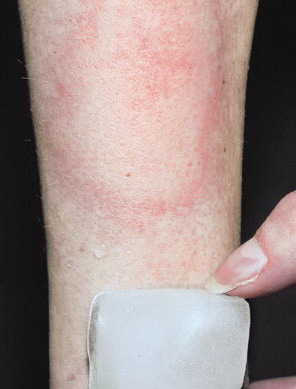
Cold urticaria is an allergy to cold temperatures.  Exposure to cold will cause redness, itching, and hives on the exposed skin.  Avoidance of cold conditions is recommended for people with this condition.


REFERENCES:
Baumhakel, M. & Bohm, M. (2010). Recent achievements in the management of Raynaud’s phenomenon.  Vascular Health and Risk Management, 6:  207 – 214.  Available at:  http://www.ncbi.nlm.nih.gov/pmc/articles/PMC2856576/pdf/vhrm-6-207.pdf

Biem, J., Koehncke, N., Classen, D., & Dosman, J. (2003).  A the bedside:  Management of hypothermia and frostbite.  Canadian Medical Association Journal, 168(3):  305 – 311.  Available at:  http://www.ncbi.nlm.nih.gov/pmc/articles/PMC140473/pdf/20030204s00018p305.pdf

Cappaert, T.A., Stone, J.A.,Castellani, J.W., Krause, B.A., Smith, D. & Stephens, B.A. (2008).  National Athletic Trainers’ Association position statement:  Environmental cold injuries.  Journal of Athletic Training, 43(6):  640 – 658.  Available at:  http://www.nata.org/sites/default/files/EnvironmentalColdInjuries.pdf

Castellani, J.W., Young, A.J., Ducharme, M.B., Giesbrecht, G.G., Glickman, E., and Sallis, R.E.  (2006).  Prevention of cold injuries during exercise.  Medicine and Science in Sports and Exercise, 38 (11):  2012 – 2029.  Available at:  http://journals.lww.com/acsm-msse/Fulltext/2006/11000/Prevention_of_Cold_Injuries_during_Exercise.19.aspx#

Submitted by Heather L. Clemons, MS, MBA, ATC

Tuesday, November 13, 2012

Environmental Cold Injuries: Prevention


PREVENTING ENVIRONMENTAL COLD INJURIES

The late fall is upon us and in some places signs of winter have arrived with snow and cold temperatures.  While environmental cold injuries can happen any time of year in the right conditions the likelihood of these injuries increases as the ambient temperature drops, the snow falls and the ski or snowboarding trips are planned.  While those competing in traditional winter sports or wildernesses activities can be particularly at risk for environmental cold injuries, so can athletes who are participating in traditional fall sports in cold conditions.  Participation in a football or soccer game or even a cross country race in cold weather can potentially lead to frostbite or hypothermia with the right combination of conditions.  The important thing to understand is that these types of injuries can be prevented with appropriate precautions.

ENVIRONMENTAL RISK FACTORS:
In order to understand how to prevent environmental cold injuries you must first understand cold stress and your body’s response.  As an equation, cold stress can be described as follows:


As the temperatures become lower and wind speeds rise the likelihood of environmental cold injuries increase.  The likelihood increases even further if a person is outside in cold temperatures with high wind speeds and is wet (perhaps from sweating or even immersion in cold water).  Heat transfer in the water is 70 times greater than in the air.  Heat loss increases two times when someone is wet and cold as compared to dry and cold.  Additionally, the insulating properties of clothing are decreased up to 90% when wet.  The NOAA windchill chart can give you an idea of the increasing injury potential as temperatures drop and wind speeds increase.


NON-ENVIRONMENTAL RISK FACTORS:
Several non-environmental risk factors or certain medical conditions can increase the potential for environmental cold injuries.  Those who have suffered previous environmental cold injuries are 2 – 4 times more likely to suffer another injury.  Females are also 2 times more likely to suffer from environmental cold injuries.  Wearing the appropriate clothing (check insulation rating) is a particular focus on prevention, being unprepared increases injury risk.  Youth athletes are at increased risk of injury because of higher surface area to mass ratio and lower adipose deposits.  This means young athletes can suffer from an injury in conditions that would not normally impact adults.  Also, if your child suffers from exercise-induced bronchospasm or asthma, Raynaud’s syndrome or cold urticaria the risk of environmental cold injury increases.

PREVENTION RECOMMENDATIONS:
The National Athletic Trainers’ Association Position Statement:  Environmental Cold Injuries (2008) delineates several recommendations in order to prevent cold injuries.  Those recommendations are as follows:
  • Have trained personnel available that are specifically trained in cold injury prevention, recognition, and treatment; athletic trainers are among these.
  • Identify those participants that are increased risk and monitor them closely; in certain situations they may need to be withheld from participation.
  • Have a clear event or practice guideline on assessing weather conditions and making decisions about event postponement or cancellation.
  • Know how to properly layer clothing with an inner wicking layer, middle insulation layer and wind and water resistant external layer; click HERE for a video and HERE for an article on how to layer properly.
  • For young athletes more frequent breaks and opportunities to warm are necessary.


Next post:  Recognizing common environmental cold injuries

REFERENCES:
Cappaert, T.A., Stone, J.A., Castellani, J.W., Krause, B.A., Smith, D., and Stephens, B.A. (2008).  National Athletic Trainers’ Association position statement:  Environmental cold injuries.  Journal of Athletic Training; 43(6): 640–658.  Available at http://www.nata.org/sites/default/files/EnvironmentalColdInjuries.pdf

National Weather Service. Windchill Chart.  Accessed at http://www.nws.noaa.gov/om/windchill/

Occupational Safety and Health Administration.  Cold Stress  Accessed at http://www.osha.gov/SLTC/emergencypreparedness/guides/cold.html

Submitted by Heather L. Clemons, MS, MBA, ATC

Saturday, November 10, 2012

Preventing Overuse Injuries in Youth Athletes


OVERUSE INJURIES IN YOUTH SPORTS

Sports participants of any age can suffer acute or overuse (chronic) injuries.  Acute injuries are those that happen unexpectedly to an otherwise healthy participant; examples include muscle strains, joint sprains, and fractures.  Overuse injuries are those that develop over time because of repetitive stress; examples include tendinitis, stress fractures, and “shin splints.”  Pediatric/adolescent overuse injuries are those repetitive stress injuries that are happening in participants under the age of 18.  There are approximately 30 - 35 million sports participants between the age of 5 - 18 (Soprano & Fuchs, 2007), causing a significant increase in the number of pediatric overuse injuries.  Studies have reported that overuse injures account for an estimated 50% of all athletic injuries, requiring twice as many visits to sports medicine physicians as acute trauma (Cuff, et al., 2010; McLeod, et al., 2011). There are also approximately 2.6 million emergency department visits in the United States for sports-related injuries for those between age 5 -24 years old, with the highest percentage being in males 5 - 14 years old (Soprano & Fuchs, 2007).

There has been significant focus on the prevention of pediatric overuse injuries because of their increasing occurrence and the potential for long-term rehabilitation programs and significant missed participation time (McLeod, 2011).  Youth athletes are participating in sports with developing skeletons leading to the possibility of growth plate injuries such as Osgood-Schlatter’s, Sever’s disease and others (McLeod, 2011; Soprano & Fuchs, 2007).  These conditions can cause significant pain and disability and are best treated by preventing them in the first place.  The exact causes for such repetitive stress injuries are unknown due to lack of research, but suggestions are that injuries can be the result of improper technique, training errors, excessive sport training, and muscle imbalances or weakness (McLeod, 2011).

Focusing on the prevention of these overuse injuries the National Athletic Trainers’ Association issued a position statement (April 2011) in an effort document the best practice to date on the prevention of pediatric overuse injuries.  The position statement addresses the following areas as key steps in preventing overuse injuries:
  • Injury surveillance research
  • Pre-participation physical examination
  • Identify risk factors
  • Coach education and medical supervision
  • Sport alteration
  • Training and conditioning programs
  • Sport specialization


Overuse injuries are not life-threatening events, but they can be very painful and debilitating.  It is just as important for parents to understand how to prevent overuse injuries as it is to be prepared for an emergency.  Parents are critical in making sure that their children are getting an appropriate amount of rest and limiting the number of months during a given calendar year that they participate.  The amount of time spent participating in sports in a given calendar year is the biggest controllable risk factor for injury based on available research (Cuff, Loud & O'Riodan, 2010).  Given the growing number of private leagues and the continued availability of school sport programs athletes may also be participating in two sports concurrently.  Appropriate rest is necessary for proper recovery.  Parents should be sure their youth athletes are getting the necessary rest in a given athletics season and calendar year.

While the information provided by the NATA is a good jumping off point for parents, its intended audience is athletic trainers and other health care providers.  This begs the question, what resources are out there for parents who want to learn more about overuse injuries?  STOP Sports Injuries is a campaign and website developed by a coalition of organizations and corporations invested in preventing overuse and traumatic injuries in kids.  I have focused on this particular campaign because of the resources it makes available to parents.  There are educational resources available about a variety of injuries, tip sheets for preventing overuse injuries, and sport specific tip sheets just for starters.  There is also a blog, media resources and a repository of key position statements regarding the care of young athletes.  Simply click on “STOP Sports Injuries” link and look around.

REFERENCES:
Cuff, S., Loud, K., and O'Riodan, M.A. (2010).  Overuse injuries in high school athletes.  Clinical Pediatrics, 49(8):  731 - 736.  Available at http://cpj.sagepub.com/content/49/8/731.

McLeod, T.C., Decoster, L.C., Loud, K.J., Micheli, L.J., Parker, J.T., Sandrey, M.A., and White, C.(2011).  National Athletic Trainers' Association position statement:  Preventing pediatric overuse injuries. Journal of Athletic Training, 46(2):  206-220. Available at http://www.nata.org/sites/default/files/Pediatric-Overuse-Injuries.pdf.

Soprano, J.V. and Fuchs, S.M. (2007).  Common overuse injuries in the pediatric and adolescent athlete.  Clinical Pediatric Emergency Medicine, 8(1):  7 - 14.  Available at http://www.clinpedemergencymed.com/article/S1522-8401(07)00010-9/fulltext.

Submitted by Heather L. Clemons, MS, MBA, ATC