Showing posts with label prevention. Show all posts

Thursday, December 12, 2013

Recognizing Bacterial Meningitis


Given recent outbreaks in California and New Jersey and Aaron Loy’s continuing recovery meningitis has been a topic on the minds of college students and their families around the country.  For those in San Diego interested in the progress of Aaron Loy a coming post will help answer some of your questions.  Our thoughts and prayers go out to Aaron and his family, hoping that he makes a speedy recovery.  For others, the questions become how do I avoid contracting meningitis?  How do I recognize someone who is suffering from the condition?  Today’s post will be an effort to help you understand 1) what meningitis is, 2) how to prevent meningitis, and 3) what to do if you believe someone has meningitis.

Meningitis is the inflammation of the coverings of the brain and spinal cord, usually the result of bacteria in the cerebrospinal fluid.  The severity of the condition and necessary treatment are dependent on the cause of meningitis.  Meningitis can result because of a bacterial infection, a viral infection, parasitic infection, fungal infection or certain cancers, drugs or head injuries (non-infectious).  Parasitic meningitis is uncommon in more developed nations.  The Centers for Disease Control (CDC) has collected a variety of resources to answer your many questions including this podcast and FAQ sheet.  For those of you who like videos, check out this one:


To read more about the signs and symptoms associated with bacterial meningitis click HERE.  The most important things to understand about bacterial meningitis include risk factors, how to prevent it and knowing when to seek treatment.  The condition can progress quickly and become catastrophic if antibiotics are not administered in a timely fashion so it is important to recognize it quickly.

  • College students are most often at risk for meningitis because of the community setting (dormitories) that many of them live in.  Living in close quarters and coming into close contact with friends (who could be sick) is the easiest way to spread meningitis.
  • The easiest way to prevent meningitis is to complete the vaccine schedule.    
  • The most common signs and symptoms are sudden onset of a fever, severe headache and a stiff neck.  Others include nausea, vomiting and altered mental status.
  • If you suspect someone has meningitis transport them immediately to the hospital.  Typically antibiotics will be administered once a diagnosis is confirmed.

Knowing there is a current outbreak of meningitis at two universities around the nation can be unnerving, but educating yourself and your family and minimizing your risk can help set you at ease.  I have taken the time to list more resources below for those that would like to learn more.

OTHER RESOURCES:

Submitted by Heather L. Clemons, MS, MBA, ATC

Wednesday, August 14, 2013

Will James Featured in ESPN’s Outside the Lines

 It will be three years almost to the day since Will suffered heat stroke at the end of a Pulaski High School football practice on August 13, 2010.  Thanks to the quick actions of his athletic trainer who moved him into the showers and began cooling him with water and ice Will is focusing on his future.  He is currently a sophomore at the University of Arkansas and hopes to attend law school.  Unfortunately, the same cannot be said for Tyler Davenport, another Arkansas high school football player who suffered heat stroke at the same time as Will and did not survive.  In spending some time speaking with Will it is obvious how much his recovery and Tyler’s death has motivated him to educate others about how to prevent heat illness. Will says, “Heat illness is 100% preventable.  Every time I do an interview I am honoring Tyler’s memory and helping people understand that there are consequences for not knowing what to do.”

Since Will’s injury he has become involved in several organizations that promote heat illness prevention and has been featured on television programs on the topic.  You are already familiar with him as an original ASA™ ambassador for Advocates for Injured Athletes, but he is also very involved with the Kendrick Fincher Hydration Foundation.  This foundation was started by Rhonda Fincher following the death of her son on August 25, 1995 from heat stroke following a junior high school football practice in Rogers, Arkansas.  The Foundation focuses specifically on preventing heat illness and Will has worked closely with this organization, telling his story in hopes of helping others.

Will was contacted by Advocates for Injured Athletes to film a video regarding his experience with heat illness and to help others prevent and treat the condition, making him a founding ASA™ ambassador.  The video filming was a three-day event that involved his coaches, teammates and his entire family working hard in the August heat.  Will’s mom opened her home to the San Diego-based film crew during the entire filming process.  The end result was a film that is shown at every ASA™ program and has already been viewed by approximately 1500 athletes.  Athletes know what to do because of Will and his video and A4IA hopes that the video will be seen by every middle school and high school athlete in the country.  Advocates for Injured Athletes and its founder Beth Mallon are forever grateful and thankful for the time and effort Will and his family put in to making the heat illness video and the ASA™ program such a success.  As Beth Mallon says, “He is a gifted speaker and tells a genuine, compelling story that athletes listen to!”

Patti James, Doug Casa, Will James
in 2011 at Arkansas ATA Annual
Meeting
Will was most recently featured on ESPN’s Outside the Lines (originally aired August 11, 2013 at 9p EST) in a piece titled, “Heat Stroke”.  The airing discusses the connection between heat illness and football and the research that is being done to prevent it.  Along with featuring Will and Tyler’s stories, it discusses Korey Stringer and speaks with the Korey Stringer Institute’s Doug Casa, Chief Operating Officer, in an effort to understand where we've been and where we’re going in our efforts to prevent heat illness in all sports, but especially football.  You can check out ESPN’s website to see when the episode will be re-aired.

He was previously featured on PBS’s Frontline in a piece titled, “Football High”, taking a look inside the high profile nature of many high school football programs around the country.  Asking the question, “Is it worth the risk?”  The piece touches on the many potential dangers of high school football ranging from concussions to heat illness.  This programming originally aired in 2011, but is still available online by clicking HERE.  

In my brief interaction with Will, he admitted that the first year following his injury was tough, he just wanted to put it behind him.  Now, telling his story is much easier and he realizes telling his story means telling Tyler’s.  Will and Tyler’s stories will always be connected, not just because they were both admitted to Children’s Hospital in Little Rock together, but because Will is so committed to honoring Tyler’s memory.  Will remains in touch with the Davenport’s today and visit’s Tyler’s resting place every chance he gets. 


The power of storytelling is evident in Will’s efforts and the number of untold athletes he’s helped understand the dangers of heat illness.  Never has a story made it so clear that knowledge is power.  Knowing what to do can make all the difference. 

Heat illness IS 100% preventable. 

Do YOU know what to do?

Submitted by Heather L. Clemons, MS, MBA, ATC

A special thanks to Will James for taking the time to speak with me by phone in order to write this piece.  It was my privilege to meet such a great young man who is willing to relive his story in an effort to help others.

Wednesday, July 31, 2013

FOOTBALL HELMETS: CERTIFICATION & FITTING

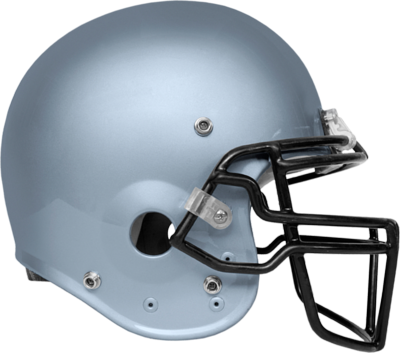
It’s that time of year.  July has flown by and the calendar will turn to August in just a few days.  NFL training camps have already started and pre-season practices will start for colleges and high schools in the coming days and weeks.  Football isn’t the only sport that is ramping up, but it is one of the most equipment intensive.  The continued attention on concussions and minimizing their likelihood has put focus on the equipment, especially helmets.  If you’re not familiar with the guidelines that govern helmets it can be overwhelming.  While no helmet will prevent concussions entirely, properly certified and fit helmets are the most effective at minimizing the risk.

NOCSAE CERTIFICATION
The National Operating Committee on Standards for Athletic Equipment (NOCSAE) is the organization that certifies football helmets in the United States.  They also certify other sport helmets including softball/baseball, lacrosse and hockey.  When checking out your child’s equipment or communicating with the league regarding equipment check for a current NOCSAE label on the back of the helmet.  Schutt, one of the major helmet manufacturers has even started putting QR codes in the NOCSAE label to teach parents and athletes about concussions. 

The NOCSAE certification means the helmet has gone through various laboratory test to assess their ability to withstand a variety of forces.  Once the helmet passes the testing and meets the appropriate standard the helmet receives its NOCSAE label and can be sold by its manufacturer.  For helmets that have  been used for a season they are sent back to the manufacturer to be recertified.  NOCSAE also has specific standards for the recertification process.  If you want to learn more about the reconditioning and recertification process you can check out these videos by Riddell, Schutt and Xenith, three of the major helmet manufacturers.  

SELECTING A HELMET
Often times, coaches, in conjunction with administrators and equipment managers  will make the selection of equipment prior to athletes joining the team based on a variety of factors.  Athletes often are then just fit for the appropriate sized helmet (and other pads) from the available selection.  Parents in the position to select equipment specifically for their child should research the available options.  To start you must know whether you need a youth or adult helmet, what type of helmet is most comfortable for the athlete and what position he will be playing (this influences facemask selection).  Youth athletes should not wear adult helmets and vice versa.  The helmets may be made using different design specifications and especially in the case of an adult wearing a youth helmet, may not provide the expected protection.  Once you have this information, investigating each of the major manufacturers, looking at NOCSAE guidelines and test results for given helmets and even utilizing the Virginia Tech STAR Rating System can help you make your final decision.  As a note, there is some controversy regarding the accuracy of the STAR Rating System so I have linked some recent discussion regarding the topic, so you can make an informed decision.


Also be aware, that some companies are also pushing helmet add-on products as a way to reduce the likelihood of concussions.  This method of additional protection has become so popular that NOCSAE has released a statement regarding the use of such products and how that impacts the helmet warranty.  Personally, I am not an advocate of such products since I believe if they were proven effective helmet companies would be including them as part of the standard design, but others would disagree. They argue there is not enough research available currently to make a determination for or against the products at this time.  Again, I urge you to educate yourself and make an informed decision.  To help in that regard I have included NOCSAE’s statement regarding the use of such products on football helmets.


FITTING A FOOTBALL HELMET
Finally, the most important thing you can do is to be sure your child’s helmet fits correctly.  There should be someone who is responsible for issuing the equipment that is trained in the proper fitting of such equipment, no matter the athlete skill level.  Colleges often have athletic trainers and equipment managers who have been trained to assess the fit of helmets and other equipment.  For any youth or high school team that does not have an athletic trainer and/or equipment manager, parents should confirm that coaches or administrators who will be issuing equipment have the proper training to do so. 

Additionally, parents should be familiar with the basics so they can check the status of their child’s equipment as the opportunity presents itself.  Many modern helmets are now fit with air bladders that need to be inflated and re-inflated regularly to ensure the proper fit.  Someone on the team should be designated to check this regularly on all players, but parents can quickly assess this too.  Ask your child to put on his helmet, strapping the chinstrap and then provide a firm downward pressure to the crown of the helmet.  If the helmet is properly inflated there should be a slight recoil of the helmet when you release your hand.  If there is no recoil, the helmet does not have enough air, be sure the helmet is inflated before the start of play.  Secondly, facing the athlete, grasp the facemask and attempt to rotate it left to right and up and down.  The helmet should not move; if it does this could be a sign that the bladder is not properly inflated (as well as other fit concerns).  Refer the athlete immediately to someone trained in fitting helmets to assess whether it’s just the air bladder or adjustments to cheek pads, helmet size or chinstrap need to be made.  Helmets should fit snuggly and should move very little if properly inflated and correctly secured.  Your child should not be able to easily rip off his helmet at any time, nor should his helmet pop off after being contacted by another player (assuming someone didn’t pull illegally on his facemask).  If you notice any of this, the helmet is not being properly worn.  Address it immediately, especially considering there is a growing trend of young athletes deflating their helmets.  Doing so increases the potential concussion risk and decreases the effective protection the helmet provides against head and face injuries.

If you’d like to know more about the exact process of fitting a football helmet I’ve attached some resource links.  The most important thing to remember is that when being fit the athlete should have the hairstyle he is expecting to maintain during the entire season and fit should be reassessed periodically for maximum protection.


In closing, no helmet is 100% effective at preventing concussions (or any type of head injury for that matter), but properly selected, sized and fit equipment is more effective than inappropriate or poorly fit equipment.  Take the time to educate yourself (check out this article on recent helmet research) and check your child’s equipment to be sure it is functioning as intended.  Spend the time to explain why he should not deflate the air bladder in his helmet or otherwise alter his equipment beyond the manufacturer’s specifications.  Play hard, but play safe.

Submitted by Heather L. Clemons, MS, MBA, ATC


Wednesday, January 9, 2013

Understanding Anaphylaxis


Anaphylaxis (pronounced ANA-FALL-AXIS) is a life-threatening, whole body, allergic reaction to a chemical substance (MedlinePlus).  The reaction can be swift and catastrophic if not treated quickly.  Anaphylaxis occurs when exposed to an allergen and the body becomes sensitized to it.  Subsequent exposure results in a systemic immune response, the releasing of histamine, and resulting in a typical physical response.  Signs and symptoms of a typical reaction include hives, difficulty breathing, itching, swelling of lips, face, and/or tongue among others. 

COMMON ALLERGIES
Anaphylaxis can occur in response to any allergen, but is most rare in response to pollen and other inhaled allergens.  Allergies that are more likely to cause anaphylaxis are drug allergies, food allergies, and insect bites/stings. 

According to the CDC approximately 4% - 6% of children under 18 years old suffer from food allergies.  The prevalence of allergies is also on the rise, but the reasons for the increase are unknown.  Eight types of food account for 90% of all food allergy reactions:  cow’s milk, eggs, peanuts, tree nuts (walnuts, pecans, hazelnuts, etc.), fish, shellfish, soybeans, and wheat.  The CDC has paid particular attention to limiting accidental exposure to food allergens for children in school, as this has been of particular concern.

Drug allergies result in the same allergic response from the body as other allergens.  Most often, this reaction results in a mild rash and hives, but a severe anaphylaxis reaction is possible.  According to the NIH penicillin (and other antibiotics) are the most common cause of drug allergies.  Other drug classes that can cause an allergic response are anticonvulsants, insulin (especially animal based), iodinated x-ray contrast dyes, and sulfa drugs.  Severe allergic reactions to medication, overdoses, or other negative responses to medication are referred to “adverse drug events.”  To learn more about adverse drug events in children check out the information provided by the CDC.

When stung by an insect there is typically an immediate reaction of minor redness and itching.  For most people, the reaction ends and over a period of days the bite site begins to heal.  For someone who has an anaphylactic response to an insect bite the pain, redness and swelling will likely be much more severe and the person may report difficulty breathing.  The most common insects that cause an anaphylactic response are bees, wasps, hornets, and spiders.

IMMEDIATE TREATMENT OF ANAPHYLAXIS
If you are in a situation, where you suspect anaphylaxis the most important thing you can do is call 911 and initiate the emergency medical system (EMS).  You should also assess whether or not the individual is having difficulty breathing, if so monitor ABCs (airway, breathing, and circulation) until EMS arrives and be prepared to initiate rescue breathing or CPR as necessary.  It is also important to understand what allergy may be causing the reaction so that you can provide appropriate first aid.  Here is a list of key steps for the immediate care for someone suffering for anaphylaxis:
  • Activate EMS
  • Assess ABCs and initiate rescue breathing and CPR as necessary
  • If having difficulty breathing monitor for worsening symptoms and do not give food or drink
  • If available, instruct victim (or if necessary assist victim) in administering epi-pen
    • victims with known severe food or insect bite allergies may have an epi-pen available
  • If reaction is because of an insect sting, remove the stinger using a stiff card (such as credit card or driver’s license, do NOT use tweezers)
  • Remove any restricting clothing or jewelry around area of potential swelling to limit additional complications
  • Monitor victim until EMS arrives


For more specific information on how to treat a typical allergic reaction check out the information made available by the NIH for food allergies, drug allergies and bee/insect bites.

PREVENTION OF ANAPHYLAXIS
There are many situations where people are unaware that they have an allergy until they have their first adverse reaction making prevention impossible in these cases.  For someone with a diagnosed allergy, especially a severe one, it is very important that all effort be made to avoid contact with or ingestion of the allergen.  In many cases, individuals with severe allergies are encouraged to wear a medical alert bracelet and have an epi-pen available at all times. 

How food allergies develop are not fully understood although some research shows that breast feeding infants and delaying the introduction of common allergy inducing foods to infants until their gastrointestional tracts are mature enough to handle them (this varies by food) can help decrease the likelihood of allergies.  Once an allergy becomes known, the best prevention is to avoid the food you are allergic too.

Similar to food allergies, drug allergies should be prevented by avoiding the offending medication and often, similar medications (those in the same class). 

Finally, to minimize the possibility of being stung by a bee or other insect there are several things you can do.  Most importantly, when eating outside do not hang around garbage cans or near a large number of sweet drinks or foods.  You should also avoid wearing floral perfumes and dark or floral patterned clothing.

INTERNET RESOURCES


Submitted by Heather L. Clemons, M S, MBA, ATC

Saturday, November 10, 2012

Preventing Overuse Injuries in Youth Athletes


OVERUSE INJURIES IN YOUTH SPORTS

Sports participants of any age can suffer acute or overuse (chronic) injuries.  Acute injuries are those that happen unexpectedly to an otherwise healthy participant; examples include muscle strains, joint sprains, and fractures.  Overuse injuries are those that develop over time because of repetitive stress; examples include tendinitis, stress fractures, and “shin splints.”  Pediatric/adolescent overuse injuries are those repetitive stress injuries that are happening in participants under the age of 18.  There are approximately 30 - 35 million sports participants between the age of 5 - 18 (Soprano & Fuchs, 2007), causing a significant increase in the number of pediatric overuse injuries.  Studies have reported that overuse injures account for an estimated 50% of all athletic injuries, requiring twice as many visits to sports medicine physicians as acute trauma (Cuff, et al., 2010; McLeod, et al., 2011). There are also approximately 2.6 million emergency department visits in the United States for sports-related injuries for those between age 5 -24 years old, with the highest percentage being in males 5 - 14 years old (Soprano & Fuchs, 2007).

There has been significant focus on the prevention of pediatric overuse injuries because of their increasing occurrence and the potential for long-term rehabilitation programs and significant missed participation time (McLeod, 2011).  Youth athletes are participating in sports with developing skeletons leading to the possibility of growth plate injuries such as Osgood-Schlatter’s, Sever’s disease and others (McLeod, 2011; Soprano & Fuchs, 2007).  These conditions can cause significant pain and disability and are best treated by preventing them in the first place.  The exact causes for such repetitive stress injuries are unknown due to lack of research, but suggestions are that injuries can be the result of improper technique, training errors, excessive sport training, and muscle imbalances or weakness (McLeod, 2011).

Focusing on the prevention of these overuse injuries the National Athletic Trainers’ Association issued a position statement (April 2011) in an effort document the best practice to date on the prevention of pediatric overuse injuries.  The position statement addresses the following areas as key steps in preventing overuse injuries:
  • Injury surveillance research
  • Pre-participation physical examination
  • Identify risk factors
  • Coach education and medical supervision
  • Sport alteration
  • Training and conditioning programs
  • Sport specialization


Overuse injuries are not life-threatening events, but they can be very painful and debilitating.  It is just as important for parents to understand how to prevent overuse injuries as it is to be prepared for an emergency.  Parents are critical in making sure that their children are getting an appropriate amount of rest and limiting the number of months during a given calendar year that they participate.  The amount of time spent participating in sports in a given calendar year is the biggest controllable risk factor for injury based on available research (Cuff, Loud & O'Riodan, 2010).  Given the growing number of private leagues and the continued availability of school sport programs athletes may also be participating in two sports concurrently.  Appropriate rest is necessary for proper recovery.  Parents should be sure their youth athletes are getting the necessary rest in a given athletics season and calendar year.

While the information provided by the NATA is a good jumping off point for parents, its intended audience is athletic trainers and other health care providers.  This begs the question, what resources are out there for parents who want to learn more about overuse injuries?  STOP Sports Injuries is a campaign and website developed by a coalition of organizations and corporations invested in preventing overuse and traumatic injuries in kids.  I have focused on this particular campaign because of the resources it makes available to parents.  There are educational resources available about a variety of injuries, tip sheets for preventing overuse injuries, and sport specific tip sheets just for starters.  There is also a blog, media resources and a repository of key position statements regarding the care of young athletes.  Simply click on “STOP Sports Injuries” link and look around.

REFERENCES:
Cuff, S., Loud, K., and O'Riodan, M.A. (2010).  Overuse injuries in high school athletes.  Clinical Pediatrics, 49(8):  731 - 736.  Available at http://cpj.sagepub.com/content/49/8/731.

McLeod, T.C., Decoster, L.C., Loud, K.J., Micheli, L.J., Parker, J.T., Sandrey, M.A., and White, C.(2011).  National Athletic Trainers' Association position statement:  Preventing pediatric overuse injuries. Journal of Athletic Training, 46(2):  206-220. Available at http://www.nata.org/sites/default/files/Pediatric-Overuse-Injuries.pdf.

Soprano, J.V. and Fuchs, S.M. (2007).  Common overuse injuries in the pediatric and adolescent athlete.  Clinical Pediatric Emergency Medicine, 8(1):  7 - 14.  Available at http://www.clinpedemergencymed.com/article/S1522-8401(07)00010-9/fulltext.

Submitted by Heather L. Clemons, MS, MBA, ATC