Showing posts with label Athletic trainer. Show all posts

Wednesday, July 31, 2013

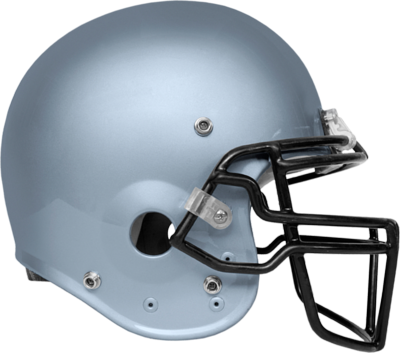
FOOTBALL HELMETS: CERTIFICATION & FITTING

It’s that time of year.  July has flown by and the calendar will turn to August in just a few days.  NFL training camps have already started and pre-season practices will start for colleges and high schools in the coming days and weeks.  Football isn’t the only sport that is ramping up, but it is one of the most equipment intensive.  The continued attention on concussions and minimizing their likelihood has put focus on the equipment, especially helmets.  If you’re not familiar with the guidelines that govern helmets it can be overwhelming.  While no helmet will prevent concussions entirely, properly certified and fit helmets are the most effective at minimizing the risk.

NOCSAE CERTIFICATION
The National Operating Committee on Standards for Athletic Equipment (NOCSAE) is the organization that certifies football helmets in the United States.  They also certify other sport helmets including softball/baseball, lacrosse and hockey.  When checking out your child’s equipment or communicating with the league regarding equipment check for a current NOCSAE label on the back of the helmet.  Schutt, one of the major helmet manufacturers has even started putting QR codes in the NOCSAE label to teach parents and athletes about concussions. 

The NOCSAE certification means the helmet has gone through various laboratory test to assess their ability to withstand a variety of forces.  Once the helmet passes the testing and meets the appropriate standard the helmet receives its NOCSAE label and can be sold by its manufacturer.  For helmets that have  been used for a season they are sent back to the manufacturer to be recertified.  NOCSAE also has specific standards for the recertification process.  If you want to learn more about the reconditioning and recertification process you can check out these videos by Riddell, Schutt and Xenith, three of the major helmet manufacturers.  

SELECTING A HELMET
Often times, coaches, in conjunction with administrators and equipment managers  will make the selection of equipment prior to athletes joining the team based on a variety of factors.  Athletes often are then just fit for the appropriate sized helmet (and other pads) from the available selection.  Parents in the position to select equipment specifically for their child should research the available options.  To start you must know whether you need a youth or adult helmet, what type of helmet is most comfortable for the athlete and what position he will be playing (this influences facemask selection).  Youth athletes should not wear adult helmets and vice versa.  The helmets may be made using different design specifications and especially in the case of an adult wearing a youth helmet, may not provide the expected protection.  Once you have this information, investigating each of the major manufacturers, looking at NOCSAE guidelines and test results for given helmets and even utilizing the Virginia Tech STAR Rating System can help you make your final decision.  As a note, there is some controversy regarding the accuracy of the STAR Rating System so I have linked some recent discussion regarding the topic, so you can make an informed decision.


Also be aware, that some companies are also pushing helmet add-on products as a way to reduce the likelihood of concussions.  This method of additional protection has become so popular that NOCSAE has released a statement regarding the use of such products and how that impacts the helmet warranty.  Personally, I am not an advocate of such products since I believe if they were proven effective helmet companies would be including them as part of the standard design, but others would disagree. They argue there is not enough research available currently to make a determination for or against the products at this time.  Again, I urge you to educate yourself and make an informed decision.  To help in that regard I have included NOCSAE’s statement regarding the use of such products on football helmets.


FITTING A FOOTBALL HELMET
Finally, the most important thing you can do is to be sure your child’s helmet fits correctly.  There should be someone who is responsible for issuing the equipment that is trained in the proper fitting of such equipment, no matter the athlete skill level.  Colleges often have athletic trainers and equipment managers who have been trained to assess the fit of helmets and other equipment.  For any youth or high school team that does not have an athletic trainer and/or equipment manager, parents should confirm that coaches or administrators who will be issuing equipment have the proper training to do so. 

Additionally, parents should be familiar with the basics so they can check the status of their child’s equipment as the opportunity presents itself.  Many modern helmets are now fit with air bladders that need to be inflated and re-inflated regularly to ensure the proper fit.  Someone on the team should be designated to check this regularly on all players, but parents can quickly assess this too.  Ask your child to put on his helmet, strapping the chinstrap and then provide a firm downward pressure to the crown of the helmet.  If the helmet is properly inflated there should be a slight recoil of the helmet when you release your hand.  If there is no recoil, the helmet does not have enough air, be sure the helmet is inflated before the start of play.  Secondly, facing the athlete, grasp the facemask and attempt to rotate it left to right and up and down.  The helmet should not move; if it does this could be a sign that the bladder is not properly inflated (as well as other fit concerns).  Refer the athlete immediately to someone trained in fitting helmets to assess whether it’s just the air bladder or adjustments to cheek pads, helmet size or chinstrap need to be made.  Helmets should fit snuggly and should move very little if properly inflated and correctly secured.  Your child should not be able to easily rip off his helmet at any time, nor should his helmet pop off after being contacted by another player (assuming someone didn’t pull illegally on his facemask).  If you notice any of this, the helmet is not being properly worn.  Address it immediately, especially considering there is a growing trend of young athletes deflating their helmets.  Doing so increases the potential concussion risk and decreases the effective protection the helmet provides against head and face injuries.

If you’d like to know more about the exact process of fitting a football helmet I’ve attached some resource links.  The most important thing to remember is that when being fit the athlete should have the hairstyle he is expecting to maintain during the entire season and fit should be reassessed periodically for maximum protection.


In closing, no helmet is 100% effective at preventing concussions (or any type of head injury for that matter), but properly selected, sized and fit equipment is more effective than inappropriate or poorly fit equipment.  Take the time to educate yourself (check out this article on recent helmet research) and check your child’s equipment to be sure it is functioning as intended.  Spend the time to explain why he should not deflate the air bladder in his helmet or otherwise alter his equipment beyond the manufacturer’s specifications.  Play hard, but play safe.

Submitted by Heather L. Clemons, MS, MBA, ATC


Saturday, July 27, 2013

Best Practices for Sports Medicine Management: A Consensus Statement

Not too long ago, guest blogger, Mike Carroll spent time talking to you about how to advocate for getting an athletic trainer hired at your high school.  You can check out that blog post HERE.  What if you already have an athletic trainer available?  How can you be assured that you children are receiving the best medical care possible while participating in sports?  For those of you who have children participating at the high school and college level the answer to that question has recently arrived in the form of a Inter-Association Consensus Statement.

The National Athletic Trainers' Association along with other 10 other associations has developed a statement intended for school and athletic program administrators, athletic trainers and physicians.  This statement focuses on best practice for the administration of a sports medicine program at the secondary and collegiate level.  The statement makes recommendations in these five areas:
  1. Define duties of the athletic trainer and team physician
  2. Define supervisory relationships and chain of command with sports medicine team members
  3. Delineate decision-making authority for student-athlete participation, injury management, and return-to-play
  4. Delineate administrative authority for hiring, renewal and dismissal of  related medical personnel
  5. Make available performance appraisal tools for the sports medicine team
Each person who reviews this statement will have a different motivation and different area of focus, but I would like to draw your attention to a few areas and expand on them further.  The first, is the area of athlete-centered medicine.  We live in a culture where physicians and other health-care professionals are now trained to care for the whole person when treating an injury or illness.  This means not simply diagnosing the condition and providing the most current treatment, but considering the wants, needs and values of the patient when providing treatment options.  This is true for any patient, including those athletes who become ill or injured while participating in sports.  

The particular challenge in the sports medicine arena is that sometimes patient values are in direct conflict with the most appropriate course of treatment given the illness or injury.  One of the most challenging parts of being an athletic trainer (and I suspect a sports medicine physician) is the decision-making process around allowing athletes to participate following an injury or illness that may not be completely resolved.  Let me be clear, the first priority for an athletic trainer (and physician) when treating an athlete/patient is their health and well being.  I would never return any athlete to play who would clearly further endanger their own health or safety despite their desire to return to play, but we all know that sometimes these decisions are not obvious or clear.  Additionally, pressure from coaches or parents to return an athlete too quickly can make these decisions even more challenging.  Having a clear definition of the roles of the AT and team physician and designating the ultimate decision-maker (typically the team physician) can make these situations much easier to manage and allow the sports medicine team to protect all athletes.  Even if that means protecting them from themselves or their parents or coaches.  In the end, people will not always like the decision made, but if the outlined process is followed, often times all parties will be satisfied that they were treated fairly and understand that the health of the athlete is most important.

Another important component to a successful sports medicine program is understanding the lines of communication and making sure that all relevant parties communicate regularly.  One of the most influential factors in the ability of all parties to communicate is clearly defining the supervisory relationships and delineating the chain of command.  There are a variety of models out there at both the high school and college levels and each has their advantages and disadvantages.  I encourage anyone who has a system already in place to review that system and evaluate how effective the model has been for providing consistent, high-quality sports medicine services to its athletic population.  If the model is effective, why?  If the model is not effective, why not?  Is the model so ineffective that perhaps it needs to be altered, if so, to what type of model should you move?  If you're looking to employ and athletic trainer and team physician for the first time, how do you decide on which model to use?  There is no right or wrong answer to these questions, just the most appropriate model for your organization.  Every effort should be made to maximize the advantages while minimizing the disadvantages.

One of the most valuable parts to this newly issued statement is that it specifically addresses many of the common sports medicine models currently in place throughout the United States at the high school and college levels.  For each model it describes the key relationship(s) in the model and well as the advantages and disadvantages of each.  Every school system is unique and not all models will fit all school systems, but this information is easily accessible and provides administrations the opportunity to easily discuss all of the most popular options before deciding on a final plan.  In the end, no matter the final decision, I believe it is important that this information is now available.  The more educated administrators, athletic trainers, physicians and parents are the better the sports medicine program will be.

So, go ahead, click the statement link and take a look.  See where your program stacks up and lets keep working to make sure that the sports medicine programs at all levels are utilizing best practices when it comes to program management.  Just remember, you need solid professionals working in a well administered sports medicine program to be the most successful, not just solid professionals or a well administered program.  

If you'd like to learn more about the organizations who have endorsed these recommendations to date, just click on their link:


Submitted by Heather L. Clemons

Wednesday, June 19, 2013

Lightning Safety Week: June 23 - 29

It wasn't too long ago that I spent some time writing about lightning safety as part of a few blogs that were intended to help you be prepared for many of the most common summer phenomena.  The National Weather Service (NWS) lightning safety week purposefully corresponds with the time of year that lightning storms are most prevalent.  According to the NWS 54 people are killed annually by lightning, while many more are injured.  There have already been seven (7) fatalities in 2013.


The original blog that I wrote just over a month ago spent time introducing you to lightning safety specific emergency action plan resources (from the NATA), connecting you with lightning strike density statistics, keys to keeping yourself safe or getting to safety if you should get caught in a storm, and some basic first aid tips for strike victims.  I am bringing this blog to the forefront again because the information it presents is important.  In my experience as an athletic trainer I feel that sometimes people do not take this particular weather phenomenon seriously and seek shelter immediately.  I am writing to urge you to take thunderstorms and lightning seriously and respond accordingly to protect yourself and whoever you may be with.


The most concerning thing about a lightning is that it can injure you without having to be directly struck by the lightning bolt.  There are 5 mechanisms of injury associated with lightning:

  1. Direct strike:  Lightning strikes person directly
  2. Contact injury:  Victim touches an object that is part of lightning's pathway
  3. Side flash (splash):  Lightning arcs from struck object to a nearby object
  4. Ground current (step voltage):  Lightning spreads peripherally through the ground
  5. Blunt trauma:  Injury results from an object that is thrown through the air during lightning strike

This is why it is important to understand what a proper safe area is and be sure you're protected.  Additionally, this is also why you shouldn't talk on the phone, take a shower or use other electronic devices during a storm.

Should you be a lightning strike victim and be fortunate enough to survive the range of long-term "side effects" of being struck is wide.  According to NWS, Medscape and other resources some long-term health concerns include:
  • chronic pain syndromes
  • neuromuscular pain
  • headaches that are not relieved with OTC medications
  • depression
  • dizziness
  • sleep disorders
  • hypertension
  • congestive heart failure
  • seizures
  • cataracts
  • many, many more
To read real stories from lightning strike survivors, click HERE.

HEADLINES FROM THIS YEAR

These are just a few recent articles regarding published stories in the United States.  More recently two people died in Russia (mother and child) and two more in Bangladesh.  Again, know your lightning EAP wherever you are and take the warnings from your AT seriously when directed to seek safety.  Doing so could mean the difference between being safe and risking significant long-term complications or even death.  As lightning safety week approaches, make a plan and stick to it as you enjoy the summer season.  Lightning can strike anywhere.... at the family reunion, at the weekend sports tournament, during the big outdoor concert or camping trip.  Be prepared.

Submitted by Heather L. Clemons, MS, MBA, ATC


Wednesday, June 5, 2013

Are you Prepared for Your Summer Sports League?

School is ending in the coming week(s) and summer will be officially under way for many families.  With summer comes camps, vacations and travel teams.  With all this parents should be aware of how (and by whom) their children's health and safety is being managed.  Parents who have children who will be signing up for fall travel sports should also begin asking questions now about health and safety concerns. Asking questions early means that if changes need to be implemented there is time before the actual sporting season begins.  In an effort to help parents ask the right questions here are five questions every parent should ask before their children participates in organized sports.


This post defines what an EAP in and the major components is should include.  It also refers readers to a key resource regarding EAP development, the NATA Position Statement on emergency planning.  While there are several conditions that may require specific detailed EAPs, given the focus on concussions time is spent specifically on the topic.


This post takes a significant amount of time to make you familiar with what an athletic trainer is and the skills they have.  Much time is spent on the major educational requirements and the knowledge and skill areas athletic trainers are qualified in once they pass the national certification examination and begin practicing.  The post also introduces you to the major organizations associated with athletic trainers including the NATA, BOC and CAATE.  There are also a variety of position statements put out by the NATA on topics such as heat illness, emergency planning concussions, asthma and other topics that are relevant to youth athletes and are available for public review.


This post explains what CPR is and how you can become trained to utilize it in an emergency.  Links are provided to the three major organizations that provide courses around the topic of CPR (and AED) as well as providing information on the topic of hands-only CPR.  


This post takes the time to explain what an AED is, how it works and how to use it.  Many states also have public access laws in place which means when you're in the airport, at the mall, or at the public pool there may be an AED available for use in an emergency.  This post can help you understand where AEDs may already be available in your state and to help you get AEDs in your school or for your league if you don't have them already.


This posts lists/discusses key governing organizations for some of the most popular youth sports such as USA Football, AYSO and Little League Baseball among others.  It also discusses key equipment safety organizations such as NOCSAE and HECC and finally provided some resources for proper coaching technique around football tackling and managing baseball pitch counts in young players.


Submitted by Heather L. Clemons, MS, MBA, ATC

Wednesday, May 15, 2013

Dietary Supplements 101


As the sporting landscape becomes more and more specialized and ultimately more competitive at a younger and younger age many athlete are looking to improve their performance in any way they can.  Often times this doesn’t mean just improving sports-specific skills and overall fitness through additional practice or training, it may mean considering dietary supplements as part of a daily regimen and diet.  While these supplements may be appropriate in some cases, it is important for parents to understand what their children may be taking.  The dietary supplement industry is a highly unregulated one, meaning choosing the right supplement that is proven effective can be challenging at best, in many cases.  Knowing this, what can parents do to learn more?   

As part of this post today I am going to point you to yet another position statement from the National Athletic Trainers Association:  Evaluation of Dietary Supplements for Performance Nutrition.  Obviously, the intended audience for this statement is athletic trainers who are often the first line of help with athletes who considering supplements, but much of the information is easily understood and appropriate for parents of young (high school) athletes who may be considering dietary supplements. 

According to the Federal Drug Administration (FDA) dietary supplements are defined as “products taken by mouth that contain a ‘dietary ingredient’ that include vitamins, minerals, amino acids, and herbs or botanicals as well as other substances that can be used to supplement the diet.”  These supplements can come in various forms:  tablets, capsules, powders, energy bars and liquids.  An important note regarding these supplements is that while the FDA regulates the definition of dietary supplements and labeling requirements, there is no requirement for third-party verification of the content of the supplements (meaning the purity is not guaranteed).

KEY MESSAGES:
The NATA Position Statement makes several key recommendations regarding dietary supplements.  I always encourage people to read the entire position statement, but in an effort to help you focus on what I believe to be most important, here are key messages parents should be aware of:

  • When helping your child improve their performance the first option should always be to adapt the daily diet through natural food intake rather than supplements.  The body can more effectively use naturally occurring ingredients as opposed to synthetic ones.  Nutritional recommendations are beyond the scope of this post, but finding a local sports nutritionist may useful in some situations.
  • Dietary supplements are not clearly regulated through third-party verification to assure purity.  Safety cannot be assumed because they are sold over-the-counter and in some cases athletes may risk unknowingly ingesting a banned substance.
  • Be aware of the resources available that can help you understand the actual dietary analysis of any dietary supplement that your child may use.  A list of resources is available in the appendix of the position statement.  Utilizing these resources will help ensure the safety, purity and efficacy of a given substance.
  •  If you are a parent that who likes to do research on your own be careful when looking at efficacy data regarding any given supplement since an overwhelming majority of it is done by the company who produces the supplement.  This potential conflict of interest may result in misleading efficacy information regarding that particular dietary supplement.


In the end, it is important that you gather as much information as you can before allowing your child to use a dietary supplement.  The position statement includes a decision-making algorithm that will walk you through all the important questions you should ask before making a final decision.  The appendix includes resources regarding:  1) food/nutrition, 2) regulatory information, 3) safety, 4) purity (third party verification), and 5) efficacy information and fact sheets.  Utilizing these resources should give you some comfort in your final decision.  I would always advocate that any dietary performance improvements be made through your daily food intake, but in some situations dietary supplements are a key addition.  If a dietary supplement is appropriate for your situation I encourage you to do the work to educate yourself to be sure you’re making the best choice for your specific need.

NOTE:  In a future post I will take the time to address the issue of supplement purity and the potential to test positive for a banned substance (particularly for college athletes) as I discuss performance enhancing drug (PEDs) use with athletes.  As a primer check out this information from the Taylor Hooten Foundation.

Submitted by Heather L. Clemons, MS, MBA, ATC

Wednesday, February 27, 2013

Athletic Training Advocacy: Personal Reflections


“Everybody Needs an Athletic Trainer” is the slogan for 2013 as National Athletic Training Month (NATM) quickly approaches.  Each year in March those of you who have been working in the trenches healing bodies and minds or challenging the next generation of professionals to do it better than we did take a moment to remind everyone else what we do and who we are.  This year’s slogan is particularly appropriate given the growing push for the availability of athletic trainers at the high school and youth levels in order to provide improved safety and health care for athletes of all ages.  This slogan has also become particularly meaningful for me personally.  I recently found myself relocating to San Diego after over 10 years in New York Metro teaching the next generation of professionals wondering how I was going to contribute.  Thanks to Beth Mallon and A4IA I am developing a new role as an advocate for both professionals and young athletes by trying to find informational, educational, and inspirational stories to blog about each week. 

This week I have decided to write about something very personal to me that may help you all understand why I take the time each week to bring you new information about how to make your families and yourself safer when participating in physical activity.  Perhaps after I tell this story you will understand why A4IA is so important to me and why I hope for the day when all athletes can participate under the supervision of a highly trained athletic trainer as part of a broader safety plan. 

The story begins back in 2001 when I was a first year assistant athletic trainer at a smaller Division I institution in New York.  I relocated to New York from Corvallis, Oregon following the completion of my graduate assistantship with the women’s soccer program.  It was mid-November and I was finally starting to settle in.  I has just completed my first women’s soccer season, I was getting to know the men on the baseball team and was looking forward to getting used to the surroundings and culture of New York, since I wasn’t traveling for games every weekend.

This particular afternoon started like any other.  It was slow since many of the soccer players were off enjoying the end of the season and the baseball team was just outside on the quad doing some conditioning work.  I was in the athletic training facility catching up on paperwork and going through an assignment with a student, when everything changed. 

One of the pitchers ran in yelling, saying that something was wrong with one of the other players and I needed to run outside quickly.  I knew without asking something was terribly wrong, grabbed a pocket mask and my phone, and ran outside.  I arrived to find one of the players lying face-up on the field, unresponsive, not breathing and without a pulse.  I immediately instructed the coach to contact 9-1-1 and instructed the student who followed to retrieve the AED (which we has just received a few weeks before) and immediately began CPR.  I continued CPR until the AED arrived at which time it was applied and activated.  During this time, the ambulance arrived and the young man was transported to the hospital.  I followed the ambulance to the emergency department and waited for family, coaches and other relevant personnel to arrive, during this wait I was notified that the young man did not survive.  I was shocked.

That young man was named Jerry Gambardella and he was 19 years old.  He was one of the most happy-go-lucky men I had ever met and now he was gone.  I had done everything I could and all we could do is live with the pain of his loss.  I will never forget the look on his teammates’ faces or the sobs from his parents as they were told of his passing.  That particular baseball season would be the longest in my career.   We were all just trying to find a way to get back to normal, but with Jerry being gone we knew nothing would ever be the same.


It has been over 12 years since that fateful day in my career and I still remember it as if it happened yesterday.  Over time, I have come to understand that despite the fact that I had acted appropriately and was fortunate enough to have an AED available (not common at the time) that sometimes we cannot help everyone.  While Jerry may be gone, I have always tried to use that experience to push myself to be a better professional.  I think that it can be easy to fall in the trap of, “but that will never happen to me.”  The truth is, it can.  Emergencies do not consider whether you have prepared for the possibility, you are a new professional or you have been providing care for years; they just happen.  You need to be ready, whether you are a parent, an athlete, a health care professional. 

I have spent the years since that event trying to help students learn having to save someone’s life is part of the job description of an athletic trainer, anytime you are working.  Have a plan, so when it happens you will be ready.  While Jerry’s story did not end happily, I am determined to use his story to help others have a positive outcome.  I am not currently teaching students, but through A4IA, I hope to continue to advocate for the availability of athletic trainers at more events and occasions as well as help parents and athletes be more prepared to prevent and survive potential emergencies.  

I hope Jerry  and his family would be proud of the work I have done through the years.  Jerry's family did set up a scholarship program in his honor.  If you'd like to know more about that program, or even make a donation:  Jerry Gambardella, Jr.Scholarship


Submitted by Heather L. Clemons, MS, MBA, ATC